Showing posts with label Lutheran Monastery Virtual Tour. Show all posts

Thursday, August 21, 2014

Lutheran Monastery Virtual Tour - A Return to Germany

Last year, I embarked on what I called a "Lutheran Monastery Virtual Tour", where I wrote about several monasteries and convents in the Lutheran tradition.  Judging by what Google statistics tell me, those posts are the most consistently popular posts on this blog, and each week, people arrive here by typing phrases such as "Lutheran nuns" and "Lutheran monks" in their search engine.  You can click on the "Lutheran Monastery Virtual Tour" tag at the bottom of this post to see all the previous stops on the tour.

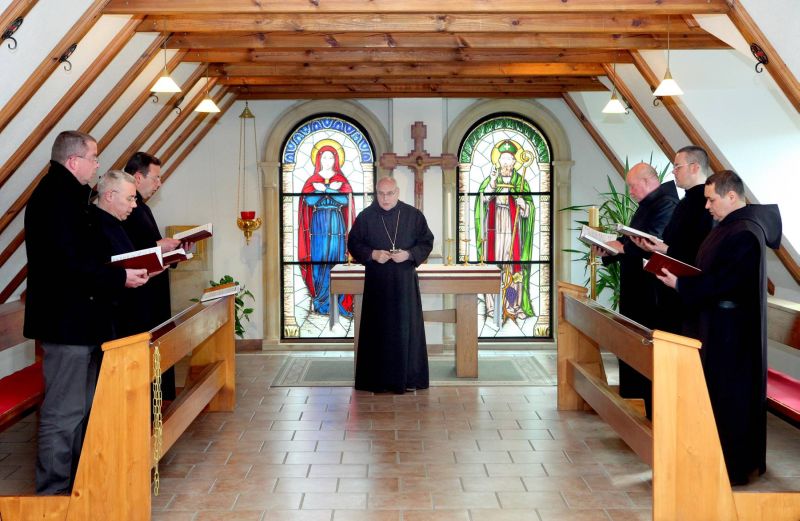
During the Tour, I made several stops in Germany, where it appears there are more functioning Lutheran monasteries and convents than any other country.  A few months ago, the "Lutheran Forum" periodical published an essay by David Zersen, entitled "Lutheran Convents in Germany".  Of course, the article piqued my interest, and it offers fascinating insights into the history and current status of Lutheran religious sisters in Germany. (The following image is from the Lutheran Forum website - http://www.lutheranforum.org/extras/lutheran-convents-in-germany/ - you can see more pictures by going to the link):


Lutheran Convents 3

Zersen's article contains the following summary of the state of German Lutheran convents, which summarizes why I think it is important for Lutheran monasteries and convents to continue their unique witness within our tradition:

"Today's Lutheran convents, challenged by changing social structures and new spiritualities, continue to explore the dimensions of the faith in both interaction and silence.  Margot Käßmann, former presiding bishop of the Evangelische Kirche in Deutschland, notes how many people search for faith and meaning in esoteric religions, all the while forgetting that meditation and mysticism are not foreign to Lutheranism.  And Dorothea Wendebourg insists that by claiming their baptism and knowing that salvation is complete through faith in Christ, women will in freedom continue to choose forms of discipleship including communal life.  The Lutheran churches in German want to nurture this choice that has been so meaningful to women for almost five centuries.  Convents still have much to offer. Uda von der Nahmer, abbess at Stift Fischbeck, remarks, 'Tradition involves passing on the fire, not worshiping the ashes.'"

(You can read the rest of Zersen's article here: http://www.lutheranforum.org/extras/2014-1_38-41_Zersen_Lutheran-Convents-In-Germany.pdf).

Tuesday, January 14, 2014

Lutheran Monastery Virtual Tour - A Return to Sweden

One of these days, I'll get back to my series on how the five senses relate to Christian spirituality (http://benedictinelutheran.blogspot.com/search/label/Five%20Senses%20of%20Spirituality).  In the meantime, I'm going to revisit the virtual tour of Lutheran monasteries that I embarked upon last summer (earlier entries can be found here: http://benedictinelutheran.blogspot.com/search/label/Lutheran%20Monastery%20Virtual%20Tour).

Why am I revisiting the tour now? I just found a list of several more Lutheran monasteries in this book: "Anglican Religious Life 2014-2015" - available here: http://www.amazon.com/Anglican-Religious-Life-2014-15-communities/dp/1848254644/ref=sr_1_1?ie=UTF8&qid=1389667060&sr=8-1&keywords=anglican+religious+life.  As you can guess from the title, 99% of the communities described in the book are found within the Anglican Communion, but there is a brief section in the book devoted to communities found in the Church of Sweden, which is linked to the Anglican Communion through the Porvoo Agreement. As I explained during my stop at the Ostanback Monastery in Sweden (http://benedictinelutheran.blogspot.com/2013/06/lutheran-monastery-virtual-tour-stop-3_22.html), the Church of Sweden retained more of the trappings of Catholicism when compared to most other Lutheran churches.  Therefore, the re-occurrence of several monastic communities in that country has been a natural outgrowth of their spiritual identity (or what remains of their spiritual identity, anyway).

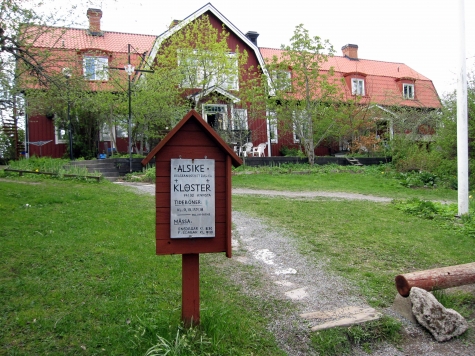
Sisters of the Holy Spirit

The Sisters of the Holy Spirit, located in Alsike, founded their community in 1965.  They pray the daily offices found in the Rule of St. Benedict, and are working with the Evangelical Lutheran Church of Kenya to expand there.  Their convent, which includes a retreat facility, is located in an old school house next to the parish church. The community also has a group of oblates and friends known as the "Friends of St. Nicholas."


You can read more about the history of their community at their website (part of which is in English):

http://alsikekloster.org/english/english1.htm

Sisters of Saint Francis

Another community in Sweden is the Sisters of Saint Francis, who have a convent north of Goteborg.  Following an adapted version of the Catholic Rule for the Third Order of Saint Francis, the Sisters pray four of the daily offices, and mass is celebrated three times each week.

If you can read Swedish, or are adept at using the Google translator, you can find out more about their community here:

http://www.klaradalskloster.se/

Other Communities

 The "Anglican Religious Life 2014-2015" book lists several other Swedish religious communities, but does not have any information about them other than an address and phone number.  They are:

Community of the Holy Trinity, located in Rattvik, Sweden
Mary Magdalene Sisters, located in Nacka, Sweden
Mary Daughters of the Evangelical Mariavagen, located in Enkoping, Sweden
Sankt Sigfrid Sisters, located in Ingelstad, Sweden
The Risen Saviour Sisterhood, located in Stallarholmen, Sweden

If anyone reading this blog knows anything about these communities (or any Lutheran monasteries I have missed on my virtual tour), please share what you know in the comments section, or contact me.

Tuesday, August 27, 2013

Lutheran Monastery Virtual Tour - The Final Stop(s)

The end of summer is rapidly approaching, and with it, the end of the summer travel season.  So, with that in mind, it is time for me to wrap up our little virtual tour of Lutheran monasteries. Instead of focusing on one monastery as I have done before, I'm going to take us to some of the ones we have missed thus far in our travels.

Amelungsborn Abbey - Germany

The Amelungsborn Abbey began as a Cistercian Monastery in the year 1135.  Following the Reformation, Duke Julius of Brunswick implemented the Reformation in his realm in the year 1568, and the abbot and community of Amelungsborn converted to Lutheranism. Andreas Steinhauer was the first Lutheran abbot, and he was the founder of the school for which the abbey is primarily known.


The abbey currently has an abbot and eight brothers, as well as approximately 30 members of a associated lay brotherhood. The following video contains beautiful music and imagery from the abbey - the narration is in German, but it is still enjoyable to watch:


For more information, there is a Wikipedia article in English:  http://en.wikipedia.org/wiki/Amelungsborn_Abbey

Their website (in German) is here:  http://www.kloster-amelungsborn.de/

Loccum Abbey - Germany

Loccum Abbey began as a Cisterician monastery in 1163 in the Lower Saxony region of Germany.  After the Reformation, the community became Lutheran, and today, the abbot is also the head of a seminary on the grounds of the monastery. 


For more information, a Wikipedia article in English can be found here:
http://en.wikipedia.org/wiki/Loccum_Abbey

Their website (in German) can be found here:
http://www.kloster-loccum.de/pages/index.html

Enonkoski Monastery - Finland

In Finland, there is one Lutheran monastery located in an old schoolhouse, currently inhabited by one permanent resident, Sister Virva Tyrväinen. The monastery is a place of quiet, rest, and prayer, offering people the opportunity to go on retreat, or for a short period of silence.  

Enonkoski monastery operates as an independent entity, but works with the Mikkeli diocesan bishop, and under the authority of and in cooperation with the Enonkoski chapel of the church.


 For more information, there is a short Wikipedia article:
http://en.wikipedia.org/wiki/The_Monastic_Protestant_Community_in_Enonkoski

They have a Facebook page:
https://www.facebook.com/enonkoskenluostariyhteiso

Also, they have a website (in Finnish):
http://www.luostariyhteiso.fi/

The Brothers of Saint John the Evangelist - United States

Technically, this monastery is a religious community of the Episcopal Church, but I am including it because: (a) some of the five men who founded the community in 1972 were Lutheran, and (b) since 2001, the Evangelical Lutheran Church in America and The Episcopal Church are in full communion with each other anyway.  The monastery is located in the State of Washington, where two of the founding members still live, and the monastery has an active group of oblates (lay members).


(An image of a Celtic cross on the grounds of the monastery)

The monastery follows the Rule of St. Benedict, and their stated goal is to:
“Advancing the Worship, Music and Arts of the Church.”

For more information, their website can be found here: http://brothersofsaintjohn.org

 
Conclusion
 
I hope you have enjoyed the virtual tour - I know I have learned a lot while researching these Lutheran monasteries.  Hopefully, their existence won't be such a secret in the Lutheran Church anymore!

Wednesday, July 17, 2013

Lutheran Monastery Virtual Tour Stop #4 - Isenhagen Abbey

While I was thinking about resuming our little virtual tour of Lutheran monasteries, it occurred to me that all of the places we have visited so far have had monks, not nuns.  So, with that mind, our next stop is Isenhagen Abbey, a convent for Lutheran women. 


Located in the Lower Saxony region of Germany, the convent dates back to the year 1243, when it was founded as a friary for Cistercian monks.  The friary burned down only 16 years later, and when it was rebuilt in 1262, it changed to a convent.  The convent moved to its current location in Hankensbuttel in 1329. At the time of the Reformation in Germany, the convent became a home for Lutheran nuns.

The Gothic buildings of the Abbey are the home of a collection of medieval furniture and works of art.  The interior contains carved and painted altars, sculptures, as well as paintings for private devotions. A slideshow of the beautiful interior of the Abbey can be found at this link on their website: http://www.kloster-isenhagen.de/fotos.html

Women who enter the Abbey are typically in their 60s, and have retired from their previous occupations.  When an interested woman desires to enter the convent, she must first go to the Abbess.  If  the aspirant fits into the community, she lives in the monastery for trial periods of time, such as weekends and weeklong stretches.  Eventually, the aspirant has a final meeting with the Abbess, and it is decided whether or not she will be included in the community. 

In case of positive decision, she will then move to one of the simple rooms in the Abbey for a probationary period.  In the event of a successful completion of the probationary period, the nun is welcomed via a solemn introduction into the community. The Church's blessing is given by the parish priest and the Abbess, in the presence of guests from her family, as well as the public.


From their website, it was unclear to me whether they follow a specific monastic rule, such as the Rule of St. Benedict, but the site does mention that the nuns come together each day for prayer and devotions.  The primary duties of the nuns revolve around taking care of the grounds, and offering guided tours of the Abbey to visitors. 

For more information and pictures of the Abbey, their website (which is in German - hopefully Google's translator did not lead me too far astray) is located here:

http://www.kloster-isenhagen.de/


Saturday, June 22, 2013

Lutheran Monastery Virtual Tour Stop #3 - Ostanback Monastery, Sweden

The next stop on our virtual tour of Lutheran monasteries takes us to a community affiliated with the Church of Sweden – Ostanback Monastery, which is one of several  communities found in that country.   If you are at least somewhat familiar with the Church of Sweden, it should come as no surprise to you that Lutheran monasticism is found there, because historically, the Swedish Church has maintained a closer connection to its Catholic roots than other Lutheran churches.
 
At the time of the Reformation, the Swedish Church went along with the fledgling Lutheran movement and adopted the Augsburg Confession as its statement of faith.  However, unlike most other Lutheran churches, the Church of Sweden maintained the practice of consecrating its bishops in apostolic succession (the first Lutheran Archbishop in Sweden, Laurentius Petri, was consecrated by Catholic bishops).  The Swedish Church also maintained other elements of the Catholic tradition with greater fidelity as well – instead of writing about it, I’ll simply refer you to this brief video of a high mass at the Cathedral of Uppsala which demonstrates my point (fast-forward to about one minute into the video to watch the recessional):


Like other Scandinavian churches, though, the Church of Sweden has been in steep decline for several decades. Statistically speaking, it continues to be the largest Lutheran church in the world in terms of baptized members, but church attendance is very low, and many of its members do not subscribe to basic tenets of the Christian faith, as described in this recent article:

http://www.livingchurch.org/church-sweden-nonbelievers

A faithful remnant remains in Sweden, however, and Ostanback Monastery is a part of that remnant. In 1960, a small group of theology students from Lund and Uppsala formed the Holy Cross Fraternity in order to be a part of the re-introduction of monasticism in Sweden. A decade later, the Fraternity purchased an old group of school buildings and moved in. In 1975, Bishop Bengt Sundkler consecrated the buildings for monastic use:
 
The community is still there, and follows the Rule of St. Benedict. One of its primary sources of income is from the making of candles:


The abbot of Ostanback Monastery is regularly invited to the conference of Benedictine abbots in Rome, where, along with abbots from Anglican Benedictine communites, he is received as an observer. For more information about the Ostanback Monastery, a portion of their website is in English:

Saturday, June 15, 2013

Lutheran Monastery Virtual Tour Stop #2 - Priory of St. Wigbert

The second stop on our virtual tour of Lutheran monasteries takes us to the Priory of St. Wigbert, found in Luther's homeland of Germany.

First of all, you might be asking the same question that I did when I first read about this monastery: Who is St. Wigbert? Briefly stated, St. Wigbert was a Benedictine monk from England who was born around the year 675.  In approximately 734, St. Boniface summoned Wigbert to Germany, after Boniface had begun the conversion of the local pagans to Christianity (as the story goes, Boniface did so by chopping down a sacred tree dedicated to the worship of Thor). Once in Germany, Wigbert was involved in leading the fledging monastic and missionary communities found there.  So, it makes sense for a German monastery to be named after St. Wigbert.

The Priory is found in the village of Werningshausen, just north of Erfurt (where Luther studied at the University, and later entered an Augustinian monastery). The monastic community was founded in 1973, and while it is affiliated with the Lutheran Church of Thuringia, it is ecumenical in nature - there are currently eight brothers living there, six Lutheran, and two Catholic. There are also novices and oblates affiliated with the community.


The community prays the daily office together in the morning, noon, evening, and at night, and celebrates the mass on Thursdays and Sundays.  Here is a video of part of a mass at the monastery:


More information can be found about the Priory at their website - this link is to the English page, but there is much more information found at other parts of the site if you can read German:

http://www.wigberti.de/?page_id=16

Sunday, June 9, 2013

Lutheran Monastery Virtual Tour, Stop #1 - St. Augustine's House, Michigan

This summer, I am going to take you on a virtual tour of Lutheran monasteries found in the United States and Europe.  Why?

First of all, one of the items on my "bucket list" is to visit a Lutheran monastery someday.  Since the closest one to where I live (St. Augustine's House, today's stop on the virtual tour) is about 800 miles away, it may be awhile before I am able to travel to one.  So, this virtual tour will have to suffice in the meantime.  

Second, I want more people to know about these monasteries. If you previously thought that the words "Lutheran" and "monastery" do not go together, you are not alone.  I did not know of the existence of any Lutheran monasteries until I saw a reference to one on the internet a few years ago. They are one of best kept secrets in the Lutheran church today, and as I will discuss in future articles, I hope that they can be a source of spiritual renewal in Lutheranism.

So, on to today's stop on the virtual tour.  St. Augustine's House is found in Oxford Michigan, just north of the Detroit metropolitan area.  The founder of St. Augustine's House was a man known as "Father Arthur" - Arthur Carl Kreinheder.  Father Arthur grew up in the Lutheran Church - Missouri Synod, where his father was a pastor.

Instead of serving in his father's church, however, Father Arthur traveled to Europe, where he was exposed to the newly formed Protestant monastic community found at Taize, France.  Eventually, he was attracted to the expression of Lutheranism found in the Church of Sweden, and he was ordained a priest in the Swedish church in 1956. He traveled back to the United States, and formed St. Augustine's House (officially known as the "Congregations of the Servants of Christ") in 1958.  Father Arthur resided at the monastery until his death in 1989.

The monastery started in a Quonset hut, but now has a beautiful retreat facility and chapel.  As of 2011, there were two professed monks and 35 associates who are affiliated with St. Augustine's House.

St. Augustine's House follows the Rule of St. Benedict, as they pray the seven daily offices, plus celebrate the Eucharist each day.   The community emphasizes the spiritual benefits of silence, as silence is observed daily from the close of Compline (night prayer) at 8:30 p.m. until the next day's Eucharist at 8:30 a.m.  Silence is also observed from the noon meal until the office of None (mid-afternoon prayer) at 2:30 p.m. 

You can get a glimpse of St. Augustine's House in this video:


Much more information can be found about St. Augustine's House on their website:

http://www.staugustineshouse.org/

Or, you can follow them on Facebook:

https://www.facebook.com/pages/St-Augustines-House-Lutheran-Monastery/124803940876095?ref=ts&fref=ts

Some day, I will make the 800 mile trek to St. Augustine's House.  In the meantime, I will pray for them, as they pray for the whole world.